Most coverage of Los Angeles's mansion tax treats the renovate-or-sell decision as a single number problem: does the tax bill at closing outweigh the cost of a remodel. In Hancock Park, that framing misses half the equation. A second approval process, one that has nothing to do with the city's transfer tax, sits on top of nearly every exterior renovation in the neighborhood, and it changes the math specifically for owners sitting in the middle of the price range, not at either end of it.
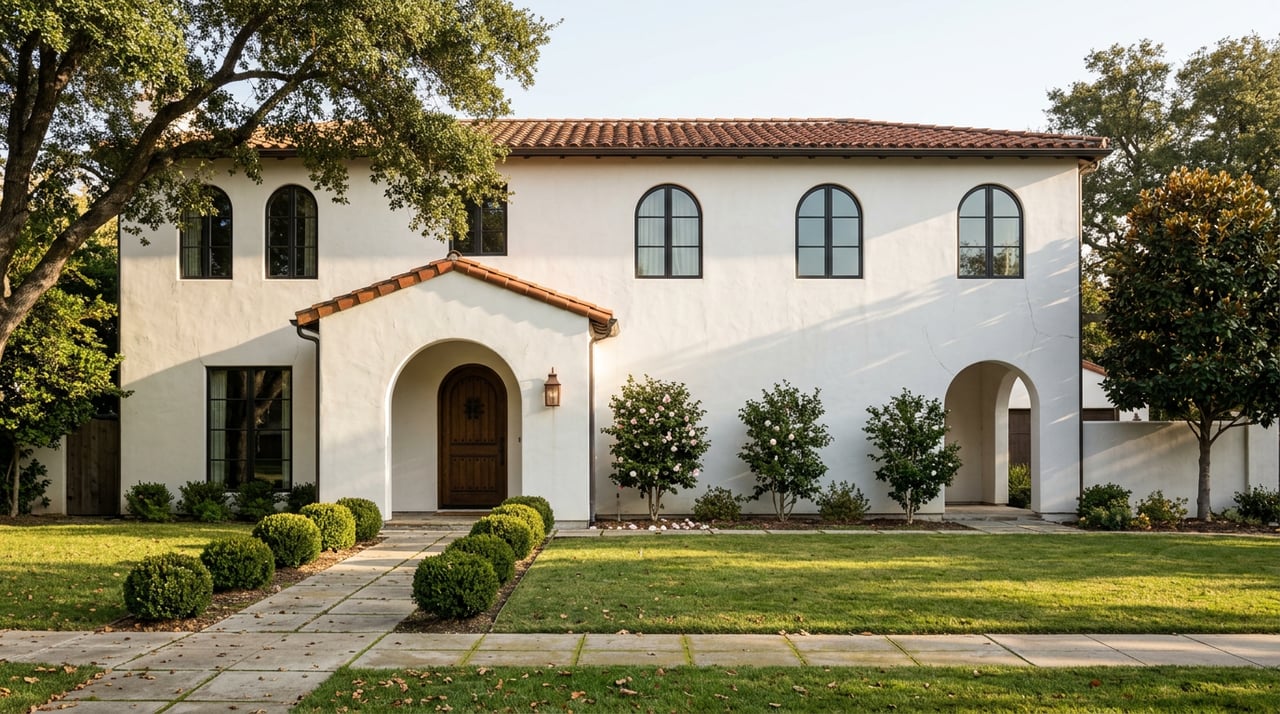
That second process is the Hancock Park Historic Preservation Overlay Zone, adopted by the Los Angeles City Council in 2008 to protect the massing, materials, and streetscape rhythm of a neighborhood built almost entirely between the 1920s and 1940s. Roughly nine in ten of the district's homes still carry their original street facing facades, according to the Hancock Park Homeowners Association, and the HPOZ is the mechanism that keeps it that way. It is also the reason a renovate-or-sell decision here takes longer to run than the same decision in a neighborhood without a historic district layered over it.
The tax side of the ledger, briefly
Measure ULA is Los Angeles's transfer tax on high-value real estate, and its thresholds reset every July 1 based on the Chained Consumer Price Index. For transactions closing after June 30, 2026, the Los Angeles Office of Finance confirms the tax applies at 4 percent on sales between $5.4 million and $10.9 million, and at 5.5 percent on anything above that, calculated on the full sale price rather than the amount over the line. A homeowner selling at exactly $10.9 million owes roughly $599,500 in ULA tax alone, on top of the standard city and county documentary transfer taxes.
The tax has reshaped seller behavior citywide. A legal update from the law firm Hanson Bridgett cites UCLA research estimating that the odds of a property selling above the $5 million threshold have fallen by as much as 55 percent since the tax took effect. Some owners have responded by staying put and remodeling instead, and reporting from The Real Deal found luxury remodel permit activity inside the city up 46 percent since Measure ULA began. On paper, that looks like a clean workaround: skip the transfer tax, invest in the house you already own.
In Hancock Park, that workaround runs into the HPOZ before it runs into a contractor's schedule.
What the HPOZ actually reviews, and what it does not
The distinction that gets blurred most often, even in guidance written for the neighborhood, is between a Certificate of Appropriateness and a Certificate of Compatibility. The Hancock Park Preservation Plan treats these as two different documents. A Certificate of Appropriateness applies to work on a Contributing structure, meaning a building the city's Historic Resources Survey has identified as retaining its original historic character. A Certificate of Compatibility applies to work on a Non-Contributing structure, one that has been altered enough over the decades that it no longer carries the same designation. Both require review before the Department of Building and Safety will issue a permit for anything visible from the street. Neither one touches work that stays inside the walls.
Interior remodels, new kitchens, reconfigured bathrooms, none of it triggers HPOZ review. The line is the sidewalk. A change to a roofline, a window profile, a front porch, a driveway, or a fence that a passerby can see from the public right of way needs sign-off first. Confirming that line matters more than it sounds, because the city determines visibility from the street itself, not from behind a hedge or a gate.
Review then splits into two tracks. Routine work that clearly matches the district's design guidelines, replacing a deteriorated window with one matching the original profile, repairing a porch with the same materials, painting in an approved color, can clear at the staff level in a matter of weeks. Work that changes the visible massing or roofline of a house, a second story addition, a change in roofing material, demolition of an outbuilding, goes to the HPOZ Board, which meets the second and fourth Wednesday of each month at Marlborough School on South Rossmore Avenue. Board-level review adds public notice requirements and a hearing, and most projects that need it do not break ground until four to six months after the process starts, on top of standard plan check.
One detail from the Preservation Plan text rarely makes it into general guidance on the neighborhood: the 30 percent threshold. When calculating whether an addition has crossed into more substantial review territory, the plan counts all additional square footage attached to the main structure, regardless of what that space is used for. A home office addition counts the same as a family room. There is no workaround built on room labels.
Where the two frictions actually collide
Here is the part that most citywide coverage of the tax skips entirely, because it requires knowing both systems at once.
A renovated Period Revival home trading in the $2 million to $3 million range never comes close to the ULA threshold. For an owner at that price point, the renovate-or-sell question is a design and lifestyle decision, full stop. The HPOZ timeline is a planning consideration, not a financial one.
At the other end, an estate on a street like Muirfield Road or Lucerne Boulevard priced well above $10.9 million is absorbing a transfer tax large enough that a few extra months of board review rarely changes the outcome. The tax bill dominates the spreadsheet either way.
| Price range | What dominates the decision |
|---|---|
| Under $5.4 million | Design and lifestyle preference; ULA tax does not apply |
| $5.4 million to roughly $9 million | Tax bill and HPOZ timeline become comparable numbers |
| Above $10.9 million | Tax bill dominates regardless of renovation timeline |
The middle band, roughly $5 million to $9 million, is where the tax bill and the cost and delay of a board-level renovation start to look like comparable line items on the same spreadsheet. It is also, by circumstance rather than coincidence, a band where a meaningful share of Hancock Park's larger, older homes change hands through a trustee or an estate rather than a straightforward listing, given how long many of these properties have stayed with the same family since the original 1920s subdivision. Development in the district began on Rossmore Avenue in 1920 and moved west toward Highland Avenue, and early homes built for figures like D.M. Baker, Mrs. Gertrude Davis, and Broadway Department Store owner Arthur Letts Jr. still stand among the district's Contributing structures today. Architects including Wallace Neff, Paul R. Williams, and Gordon B. Kaufmann designed much of what the HPOZ now protects.
A recent sale illustrates how the top of the market behaves when pricing is right regardless of the tax: an English manor style estate near an acre in size, built in 1926, went into contract in mid-July 2026 within about four weeks of listing, well above the 5.5 percent tier. Speed at that price point says more about how the ultra-luxury segment prices than it does about the renovate-or-sell calculation facing an owner in the middle of the range.
The variable neither number accounts for
There is a third lever in this decision that has nothing to do with the transfer tax and everything to do with staying put. The Mills Act is a California program administered by local governments, including the Los Angeles County Assessor, that reduces a property's annual tax bill in exchange for a contract committing the owner to restore and maintain a qualifying historic structure. Contributing properties within an HPOZ are typically the ones eligible. The contract runs for a minimum term and transfers with the property rather than the owner, meaning a buyer inherits both the tax benefit and the maintenance obligation at closing.
This matters here because it changes the "stay and restore" side of the ledger in a way the ULA conversation never touches. Measure ULA is a one-time transfer tax collected by the city at the point of sale. The Mills Act adjusts an annual property tax bill assessed by the county. An owner weighing renovation is not just comparing a known tax bill against an uncertain HPOZ timeline. They may also be looking at a lower carrying cost for as long as they hold the property, which shifts the calculus again for anyone planning to stay for years rather than sell soon.
What this means if you are on either side of a Hancock Park transaction
If you are selling in the middle price band, the HPOZ compliance record on the house is now part of your pre-listing preparation, not an afterthought. Unpermitted exterior work visible from the street is a liability that surfaces in a buyer's due diligence, and resolving it before you list costs less than renegotiating mid-escrow.
If you are buying a Contributing property with renovation plans, the sidewalk test is the first question to answer, before you fall in love with a floor plan that assumes a second story or a widened driveway. What is visible from the street determines your timeline more than your budget does.
A few questions worth asking before you decide
Does a rear addition need HPOZ approval if nobody can see it from the street? Generally no, though it still needs a standard building permit from the Department of Building and Safety. Confirm visibility with HPOZ staff before finalizing a design, since the city determines visibility from the sidewalk rather than from behind landscaping.
Is interior renovation restricted at all? No. Kitchens, bathrooms, and layout changes behind the walls of a 1920s Tudor or Colonial Revival fall outside HPOZ review entirely.
Does Measure ULA apply the same way in neighboring areas like Beverly Hills? No. ULA is a City of Los Angeles tax. Hancock Park sits inside city limits and is fully subject to it; separately incorporated cities set their own transfer tax rules.
Does a Mills Act contract affect a home's ULA exposure at sale? No. The two are unrelated taxes administered by different agencies, one annual and county-assessed, one a one-time transfer tax collected by the city.
Every Hancock Park transaction in this price range runs through decisions that touch city planning, city finance, and county assessment at the same time. Getting the sequence right, and knowing which number actually moves the decision for your specific address, is the kind of work that benefits from someone who has been through the process before. Olivia Noh has spent 27 years guiding Los Angeles sellers and buyers through exactly this kind of layered decision, backed by Compass's Concierge program for sellers who decide preparation is the better path. Reach out for a free home valuation and consultation to talk through what the numbers actually look like for your property.