If you assumed the waterfront, walk-to-Main-Street neighborhood would be the hottest ticket in Seal Beach, Redfin's own numbers say otherwise. Redfin's Compete Score labels Old Town "not very competitive," with homes typically taking around 116 days to sell. In the most recent year-over-year comparison Redfin published, the neighborhood's average days on market had climbed to 133, up from 42 during the same month a year earlier, on a thin slate of just seven sales. Meanwhile, a few miles inland, away from the sand entirely, College Park East carries a Compete Score of 82 out of 100. For the three months ending April 2026, the neighborhood posted a median sale price of $1,534,430, with homes selling in a median of 34 days and 11 sales closing that month alone.
The pricier, more desirable, more Instagrammed neighborhood is the slower market. The plainer, landlocked one is where offers move fast and multiple. That's not a contradiction. It's a pattern worth understanding before you write an offer in either place.
Here's the quick comparison, pulled from the most recent public data available:
| Old Town | College Park East | |
|---|---|---|
| Redfin Compete Score | Not very competitive | 82/100, very competitive |
| Typical days on market | ~116 days (recent month: 133) | ~34-39 days |
| Recent median/average sale price | $1.6M-$1.8M typical, up to eight figures on the sand | ~$1.46M-$1.63M |
| Housing built | 1900s-2020s, mixed eras | Almost entirely 1967-1972 |
| Housing type | Cottages, condos, back-unit combos, multi-family, new construction | Single-family tract homes |
Rule Out the Obvious Explanation First
Before crediting the schools, both neighborhoods draw from Los Alamitos Unified, one of the stronger districts in Orange County. That variable is held constant. Whatever is separating a 34-day sale from a 133-day sale, it isn't which elementary school a buyer's kids will attend.
The Real Divide Is the Housing Stock, Not the Zip Code
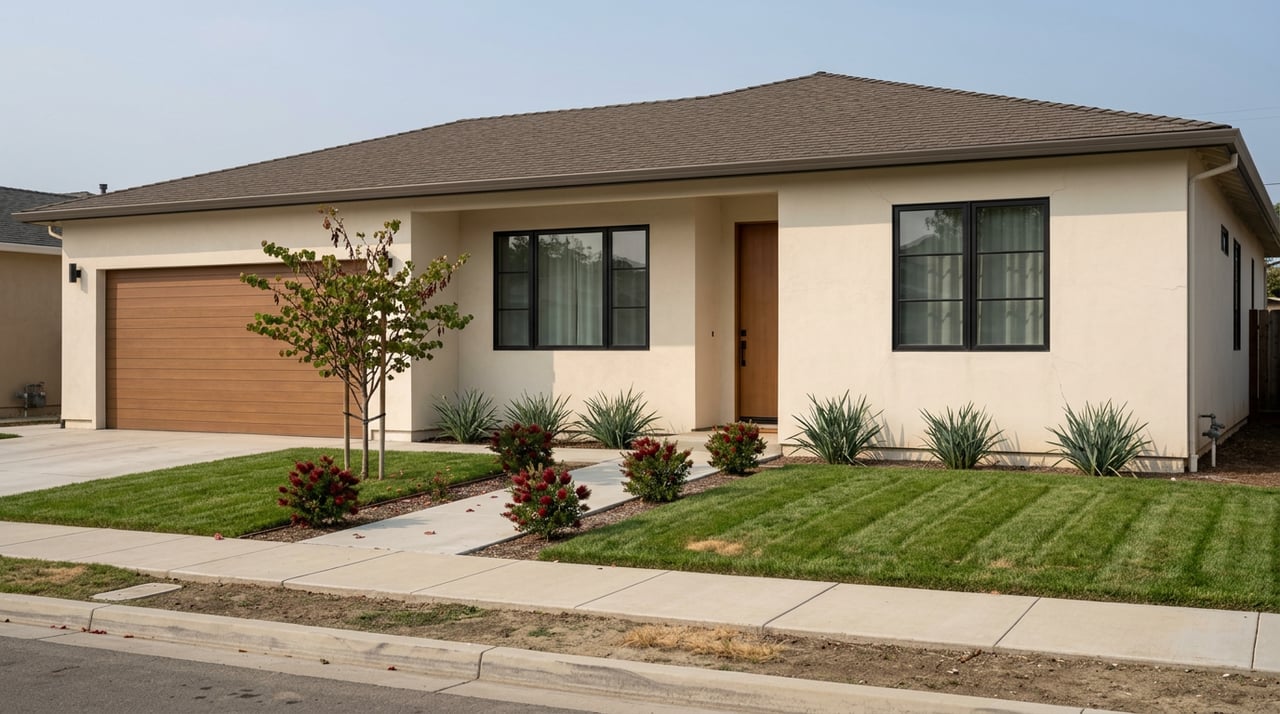
College Park East was built almost entirely between 1967 and 1972, on lots that typically run 6,000 to 8,000 square feet, with streets carrying names like Purdue, Tulane, and Stanford. Walk the neighborhood and you're looking at one product: a single-story or two-story ranch home, similar bones, similar lot size, similar age. For an appraiser, that's a dream. Comps are everywhere. For a lender, that's a straightforward file. For a buyer, that's a home that behaves the way the last five homes on the street behaved.
Old Town has none of that consistency. A single walk down a few blocks can take you past a 1920s beach cottage, a low-rise condo building, a four-unit rental property on Marine Avenue, and a modern coastal home completed in 2021 by production builder Shea Homes, all within a few hundred feet of each other. Some listings pair a front house with a converted back unit, marketed as a home office, guest space, or income-producing studio. Add in genuine oceanfront estates that can price into eight figures, and you have a neighborhood where no two transactions look alike. That variety is exactly what buyers love about Old Town. It's also exactly what slows a market down. When every property is a slightly different animal, comps get thinner, appraisals get harder to defend, and negotiations take longer because there's no obvious "last sale on the street" to anchor a price.
Old Town's Buyer Pool Isn't One Pool. It's Three.
College Park East is competing for one type of buyer: a family that wants a standardized single-family home, is often on a school-year or relocation deadline, and is comparing this house to nearly identical houses two streets over. That's a large, motivated, fast-moving pool chasing a limited but consistent supply, which is exactly the setup that produces multiple offers and short days on market.
Old Town splits its attention three ways. There are primary-residence buyers chasing walkability to Main Street and the pier. There are investors evaluating multi-family and back-unit properties on rent-roll math rather than emotional fit, often moving on their own underwriting timeline rather than the seller's. And there's a small tier of buyers shopping strictly on-the-sand, where price is less the constraint than finding the right lot at all. Each of those buyers moves at a different pace, applies for different financing, and weighs a property against a different set of comparables. A single listing might only appeal to one of the three groups, which shrinks the effective competition for that specific home even in a desirable neighborhood.
The Parking Story Is a Symptom, Not a Footnote
Old Town's density and mixed housing stock show up in daily friction too, not just transaction friction. The neighborhood already runs on a residential parking permit system, $20 annually per vehicle according to the City of Seal Beach, running each November through October, with metered spots on Main Street and demand that spikes hard on summer weekends. That system exists in Old Town because Old Town needs it. Most of Seal Beach, including College Park East, doesn't have one.
That's about to become more visible citywide. In May 2026, Voice of OC reported that the city was considering a formal framework letting neighborhoods beyond Old Town petition for their own residential permit zones, requiring a 51 percent resident majority and documented parking impacts before the council would even review a request.
"This has actually been in the works for quite some time," parking consultant Julie Dixon told the council that spring.
As of that spring 2026 discussion, no changes had been made to Old Town's own permit system, and any other neighborhood, College Park East included, would first need to petition under the new framework once it's formally adopted. But the fact that the city was building a path for other areas to request what Old Town already has tells you something: permit parking, guest logistics, and metered spots are a known cost of Old Town's popularity, not an incidental detail. For our Old Town neighborhood guide, we've noted that parking demand there is highest on weekends and during events, which is exactly the kind of friction a homogenous, car-friendly neighborhood like College Park East simply doesn't generate.
What This Means If You're Choosing Between the Two
If you're relocating on a timeline, whether for a new job, a school enrollment deadline, or a lease that's expiring, the mechanics favor College Park East. The housing stock is uniform, the comps are clean, and the buyer pool moves in sync. Expect to compete, but expect that competition to resolve in about a month.
If walkability, beach proximity, and the character of an older coastal downtown matter more to you than speed, Old Town is worth the tradeoff, as long as you go in with the right expectations:
- Build extra time into your search and your contract timeline. A 60 to 90 day close is more realistic than a 30 day one.
- If you're eyeing a property with a back unit or multi-family configuration, get pre-underwritten with a lender who understands rental income analysis before you write an offer.
- Ask specifically about parking, both for daily living and for any move-in logistics, since Old Town's permit system doesn't apply anywhere else in the city yet.
- Don't read a long days-on-market number as a sign the neighborhood has cooled. With only a handful of sales most months, one unusual property or one slow luxury sale can swing the average significantly.
A Few Questions Worth Asking Before You Choose
Does Old Town's slower market mean prices are softening? Not necessarily. A small number of monthly sales combined with a wide mix of property types, from modest cottages to multimillion-dollar estates, means the average days-on-market figure can swing a lot from one month to the next without reflecting a real shift in demand.
Why would Redfin call College Park East "very competitive" if it's less talked-about than Old Town? The Compete Score measures how quickly homes sell and how often they get multiple offers relative to list price, not overall desirability or prestige. A neighborhood full of similar homes and eager buyers can score higher on that scale than a neighborhood full of unique, expensive properties.
Should I wait to buy in Old Town until the city finalizes the parking ordinance? The proposal reported in May 2026 was working through city council review and applies to how other neighborhoods could request their own permit zones. It doesn't change Old Town's existing system. Buyers there should plan around the current $20 annual residential permit, renewed each November through October, and metered Main Street parking as it stands today.
Numbers like these are exactly why a market can't be judged by median price alone. If you're weighing Old Town against College Park East, or trying to figure out which Seal Beach micro-market actually fits how you want to live and how fast you need to move, Olivia Noh has spent years reading these patterns block by block. Reach out for a conversation about what the data means for your specific move, not just what it says on a portal.