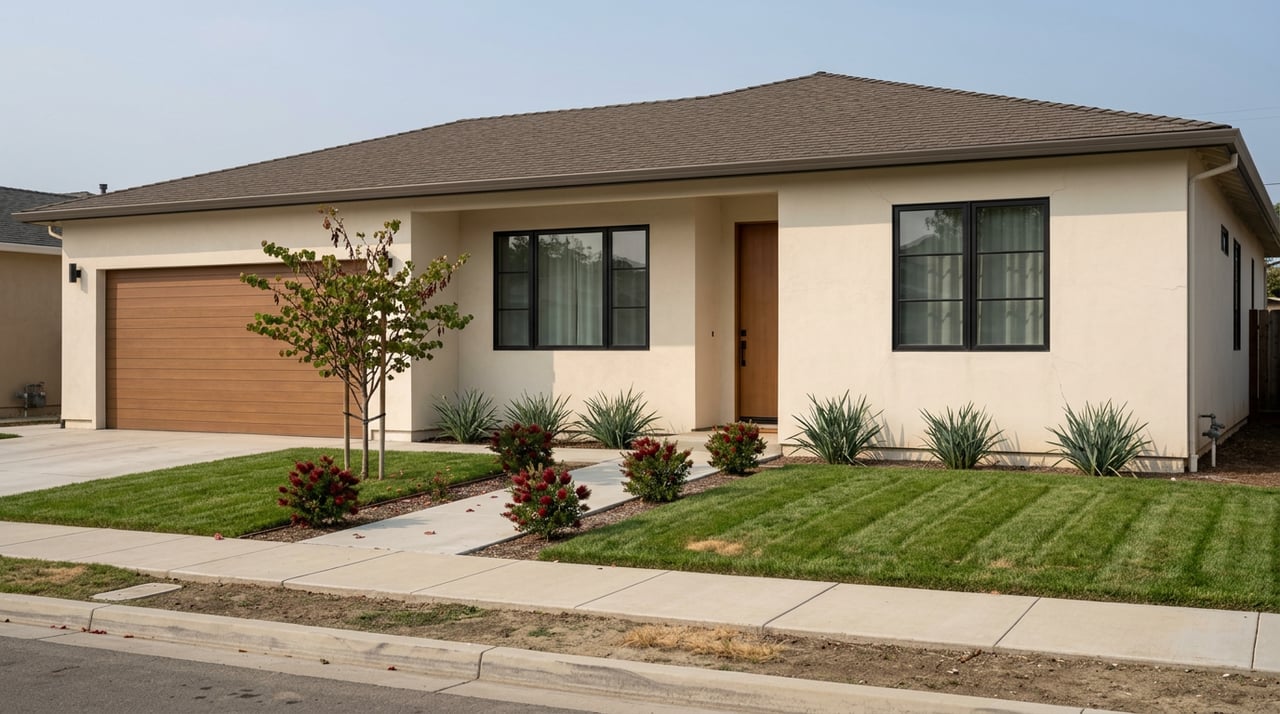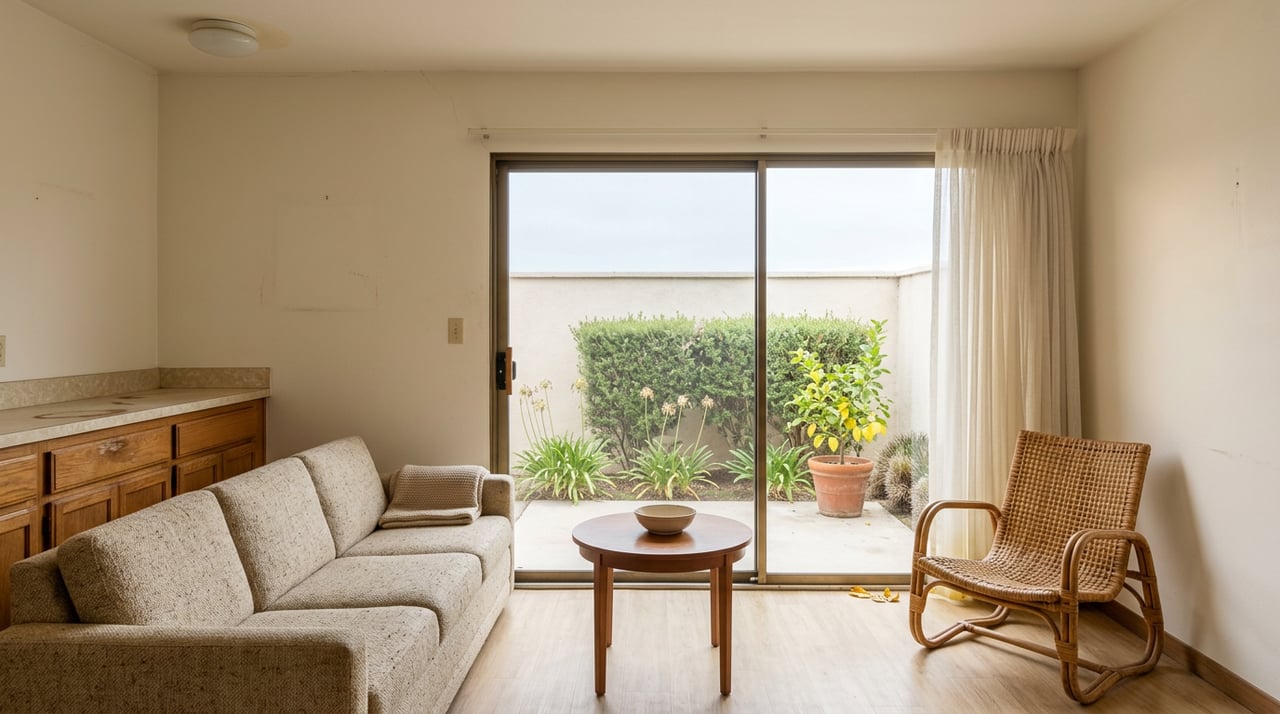
Scroll past the beach cottages and remodeled bungalows in Seal Beach and you'll hit a wall of listings that don't look like they belong in the same city. Two-bedroom units priced in the low $300,000s, sitting inside a gated 55-and-over community called Leisure World, while a comparable-sized condo closer to the pier can ask several times that. The instinct is to call it a deal. It isn't. It's a different asset class wearing the same word, "home," and the gap between the two prices tells you more about who is allowed to buy than what the unit is worth.
What You're Actually Buying Isn't a House
Most of what sells inside Leisure World isn't real property in the way a deed-holding buyer thinks of it. Sixteen resident-run Mutual corporations own the land and buildings across the community's roughly 530 acres. When you buy a unit in one of those sixteen, you're not receiving a deed. You're purchasing a share of stock in that Mutual, which entitles you to occupy a specific apartment under a proprietary lease. One mutual, Mutual 17, works differently: its owners hold an actual deed and an undivided interest in the mutual's shared assets, which means those units can carry a conventional mortgage.
Do the math on the community's own numbers and the split is stark. One long-running local resource puts the total at 6,482 cooperative units against 126 deeded condominiums, a roughly 98 to 2 split. That ratio matters more than any amenity list, because it determines who can even bid.
| Ownership type | Mutuals | Legal instrument | Financing |
|---|---|---|---|
| Stock cooperative | Mutuals 1 through 16 | Stock certificate and proprietary lease | Cash purchase; conventional mortgages generally unavailable |
| Condominium | Mutual 17 | Recorded grant deed | Conventional financing possible through specialized lenders |
Leisure World traces back to 1960, when the Rossmoor Corporation broke ground and the first residents moved in during June 1962. The cooperative units were originally built using FHA-guaranteed 40-year construction loans, which makes the current all-cash reality for individual buyers a bit of an irony: the community itself was financed, but the shares inside it mostly aren't.
The Real Down Payment Is a Bank Statement
If a co-op share can't carry a mortgage, the sticker price stops being the number that decides whether you can buy. What decides it is your liquid reserves and your income, verified before you're allowed to open escrow.
The reserve requirement varies by Mutual, not by unit price. Buyers into Mutuals 2, 3, 6, 7, 11, and 12 need to show at least $25,000 in verified liquid reserves. Mutual 5 sets the bar at $35,000. Mutuals 1, 4, 8, 9, 10, 14, 15, and 16 require $50,000. Mutual 17, the one condo mutual, asks for $50,000 held for a full twelve months, a stricter standard than most of its cooperative neighbors despite being the only one where a lender might actually help.
Income requirements scale with purchase price on a published schedule. A $325,000 purchase, close to Movoto's July 2026 median asking price of $329,000 for Leisure World, calls for roughly $3,600 in net monthly income. Buyers going into Mutuals 1, 9, 10, or 16 need to add 25 percent on top of that baseline, since those mutuals apply a stricter multiplier.
One of the closing costs every individual buyer pays regardless of Mutual: a one-time Golden Rain Foundation membership and amenities fee of $5,332.00.
That fee doesn't move the needle on the listing price you see in search results, but it's part of what closing the sale actually requires.
Board Approval Adds a Second Timeline
A conventional home sale in most of Seal Beach runs on an escrow calendar the buyer and seller largely control. A Leisure World transaction runs on the Mutual's calendar as well. Each Mutual's board reviews financial documentation, personal references, and often runs a credit check before voting to approve, approve with conditions, or deny a buyer. Mutual 2, as one example, requires a minimum FICO score of 650, though it does allow alternative financial calculations for buyers who don't fit a standard credit profile. After financial approval, buyers go through a mandatory orientation meeting with a Mutual representative, and some mutuals charge a non-refundable orientation fee of $500 to $750 on top of everything else.
None of that is unusual for a cooperative, but it stacks weeks onto a sale that a straightforward condo transaction wouldn't carry. It also shows up in the market data. Movoto's July 2026 figures put the median time on market for Leisure World listings at 121 days, a pace shaped as much by approval logistics as by buyer demand.
Why the Price Stays Low: The Buyer Pool Filters Itself
Here's the mechanism that actually explains the gap between Leisure World's median and the rest of Seal Beach. A conventional home's price reflects what a broad pool of financed buyers, competing with leverage, are willing to bid. A Leisure World cooperative share's price reflects what a much narrower pool, cash-qualified, income-verified, board-approved, and at least 55 years old under California Civil Code Section 51.3, is willing and able to pay outright.
Remove mortgage leverage from a market and you remove the mechanism that lets buyers stretch beyond their cash on hand. A buyer with $400,000 in liquid assets can only bid what they have. They can't borrow their way to a higher offer the way a financed buyer elsewhere in Seal Beach can. That constraint caps prices structurally, regardless of how desirable a unit's layout or view might be. It's not that the homes are worth less. It's that the market pricing them has fewer people in it and none of them can lever up.
The amenities bundled into monthly assessments tell the same story from a different angle. Leisure World's fees, running $350 to $700 a month depending on the Mutual, cover the community's health care center, golf course, aquatic center, five clubhouses, and fare-free minibus system. A lower purchase price paired with a real ongoing monthly obligation isn't the same thing as a lower total cost of occupancy. It's a different allocation of the same money, shifted from a mortgage payment into a Mutual assessment.
The One Exception: Mutual 17
If a buyer specifically wants deeded ownership and access to a conventional loan inside Leisure World, Mutual 17 is the only door. Even there, rental flexibility narrows: local resources put its total unit count near 150 to 160 condominiums, with only 10 percent permitted to be leased on a year-to-year basis at any time. Compare that to Mutuals 1, 10, 11, 12, and 16, which don't allow rentals at all. Anyone weighing this community as an income property, rather than a primary residence, needs to know that going in, since it rules out most of the inventory before a single offer gets written.
What This Means If You're Comparing Neighborhoods
If you're cross-shopping Seal Beach against Old Town, College Park, or Bridgeport, treating Leisure World's median as a comparable data point will mislead you. It isn't measuring the same transaction. A conventionally financed home elsewhere in the city competes on the open market against every buyer who can get approved for a loan. A Leisure World share competes against a pool that has already cleared a cash-reserve threshold, an income multiplier, a credit check, and a board vote, and that's before age eligibility even enters the conversation. The lower number on the portal isn't evidence of better value. It's evidence of a smaller, self-selected group of people who were allowed to bid at all.
Frequently Asked Questions
Can I get a mortgage for a Leisure World home? Only in Mutual 17, the community's single condominium mutual with deeded ownership. The other sixteen mutuals are cooperatives that require an all-cash purchase, since lenders generally treat stock cooperative shares as non-mortgageable.
Does the reserve requirement apply on top of the purchase price? Yes. The $25,000 to $50,000 in verified liquid reserves, depending on the Mutual, is separate from the cash needed to buy the shares themselves. It's meant to demonstrate a buyer can cover ongoing monthly assessments, not to help fund the purchase.
Why does time on market run longer here than elsewhere? Board review, financial verification, and a mandatory orientation meeting all happen inside escrow, adding weeks that a conventional sale wouldn't need. Movoto's July 2026 data put Leisure World's median days on market at 121.
Whether you're weighing a Leisure World share against a deeded condo in Old Town or trying to figure out what a listing price actually buys in any Seal Beach micro-market, the number on the portal is only the start of the conversation. ON Real Estate works across Seal Beach's full range of ownership structures, from cooperative mutuals to conventional financing, and can walk you through what a given price actually requires before you write an offer. Get a free home valuation and consultation to start with the real numbers, not just the headline one.